
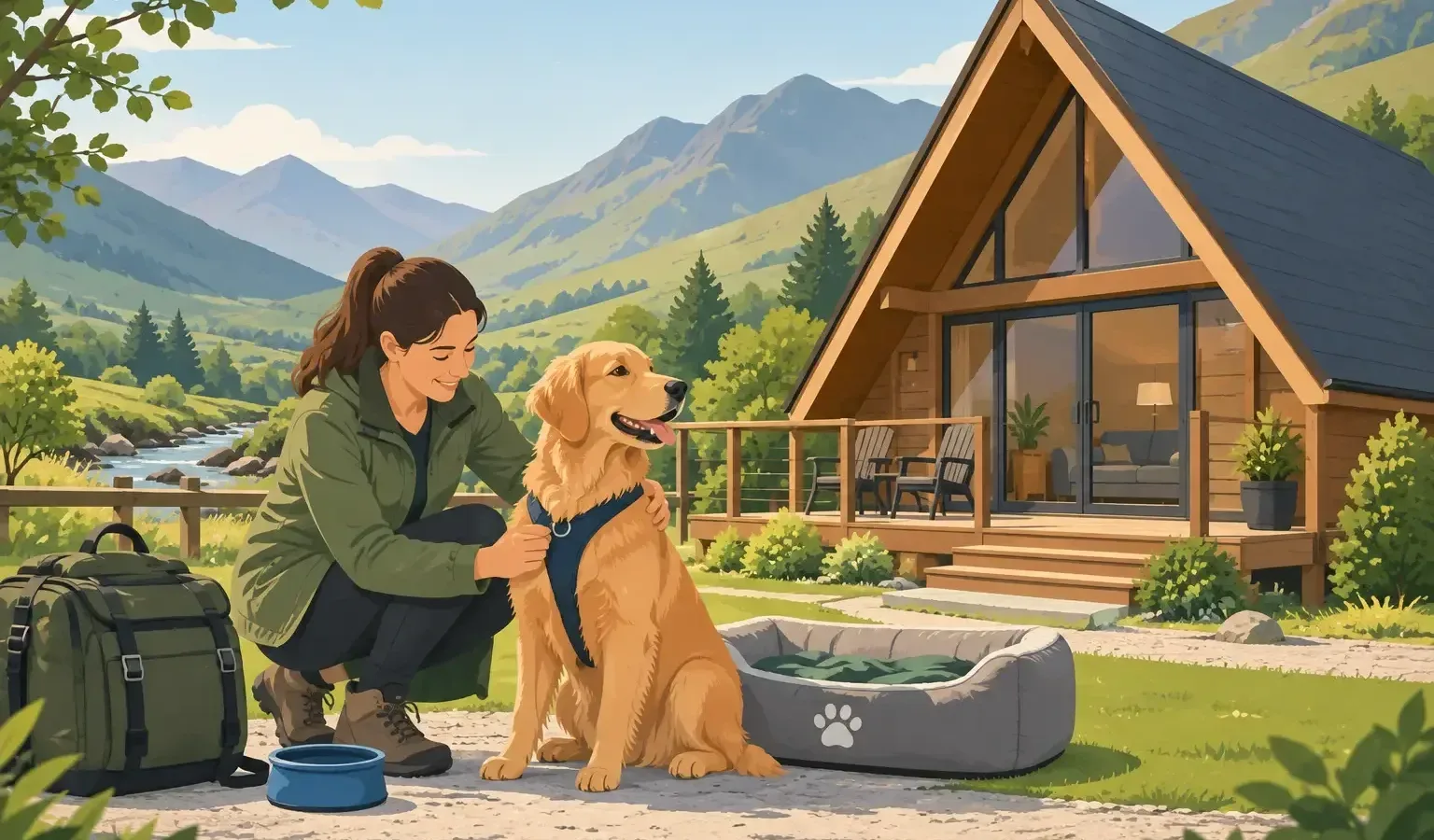
Prepare Dogs for Lodge Stays in North Wales
A countryside break is even better when the whole family is there, muddy paws included. To prepare dogs for lodge stays, the aim is not to pack every comfort from home. It is to help your dog arrive settled, feel secure in a new space, and enjoy the fresh air and freedom of North Wales safely.
For many dogs, a lodge stay is full of exciting new scents, sounds, and routines. A little thoughtful planning before you leave means less time managing an overexcited pup and more time enjoying slow mornings, valley views, and an unhurried walk before dinner.
Prepare Dogs for Lodge Stays Before You Leave
The best preparation begins a few days before your trip. Keep your dog’s normal feeding, walking, and bedtime routine as steady as possible. If you know a long car journey can make them restless, build in a few shorter drives beforehand or plan comfort breaks along the way.
A familiar item can make a new lodge feel immediately more welcoming. Bring your dog’s own bed or blanket, plus a favorite toy or chew. The scent of home is reassuring, especially for dogs who are confident outdoors but a little cautious when sleeping somewhere unfamiliar.
It is also worth brushing up on the basics. A reliable recall, a calm wait at gates, and walking politely on a leash all make a countryside stay easier. You do not need perfection. But if your dog tends to bolt after squirrels, greet every passerby enthusiastically, or pull toward livestock, a few gentle practice sessions before departure will pay off.
Check the lodge details, not just the destination
Dog-friendly does not mean every property has the same setup. Before booking or traveling, read the lodge’s pet guidance carefully. Check how many dogs are permitted, whether dogs can go on furniture, where they should sleep, and whether outdoor areas are enclosed.
At Owl Lodges, Too-wit Lodge is the dog-friendly choice, allowing guests to enjoy a private rural escape with their canine companion close by. Still, any countryside setting calls for attentive supervision. An enclosed area is helpful, but it is not a substitute for knowing where your dog is, particularly when they are exploring somewhere new.
Pack for Comfort, Walks, and Wet Paws
Packing for your dog is less about bringing everything and more about anticipating the moments that can interrupt a relaxing stay: a rainy walk, a forgotten food bowl, or a wet dog deciding the sofa looks inviting.
Bring enough of your dog’s usual food for the full break, with a little extra in case plans change. Sudden diet changes can upset even the most adventurous traveler. Pack bowls, treats, medication, poop bags, a leash, collar with up-to-date ID, and a harness if your dog wears one. A long line can be useful for open spaces where recall is still a work in progress, but it should never replace close control around roads, livestock, or wildlife.
For North Wales weather, towels are essential. Add a drying robe if your dog is prone to getting chilled, and keep a spare blanket near the door for muddy paws. A portable water bottle or bowl is useful on longer walks, particularly on warm days or exposed routes where streams may not be suitable for drinking.
A small canine first-aid kit is sensible too. Include tick removal tools, any regular medication, saline wipes, and the contact details for your vet. You may never need it, which is exactly the point of packing it.
Help Your Dog Settle on Arrival
When you arrive, resist the urge to unpack, start dinner, and let your dog race around all at once. Take them outside for a calm bathroom break first. Then introduce the lodge gradually, with doors and rooms opened at a relaxed pace.
Set up their bed in a quiet spot away from busy pathways and close to where they usually settle at home. Give them a drink, offer a familiar chew, and let them sniff around without constant instruction. Most dogs will settle more quickly when their people are calm and present rather than rushing through arrival tasks.
If your dog is sensitive to unfamiliar noises, close blinds or curtains after dark and use soft background sound if that helps at home. Rural quiet can feel different from city quiet. There may be owls calling, wind in the trees, rain on the roof, or sheep in a neighboring field. These are part of the magic for us, but they can be novel for a watchful dog.
Establish boundaries kindly
Decide your house rules from the first evening. If dogs are not allowed on beds or sofas, make that clear with calm consistency rather than repeated scolding. Covering soft furnishings with a blanket can be helpful if they are permitted up, while a baby gate or closed door may be the simplest option for dogs who need limits around certain areas.
Never leave a dog unattended in a new lodge if they are anxious, vocal, or likely to chew. A relaxed dinner at a local pub may need to wait until you know how your dog settles. Some dogs are perfectly happy after a good walk and a nap; others need a quieter first night. Let their behavior guide you.
Enjoy the Countryside Responsibly
The Clwydian Range offers beautiful walking country, but it is working countryside too. Keep dogs on a leash around livestock, even if their recall is usually excellent. Sheep, cattle, horses, and ground-nesting birds can be stressed or injured by a dog that simply wants to chase.
Choose routes that suit your dog’s fitness as well as your own. A young, energetic dog may enjoy a longer hill walk, while an older dog or short-legged companion may be happier with gentler woodland paths and plenty of pauses. Weather changes the calculation. On warm days, avoid the hottest part of the afternoon; after heavy rain, expect muddy ground and allow extra time for a careful return.
Watch for ticks after walks, especially around ears, paws, under collars, and the belly. Check paws for thorns, cuts, or grit, then dry your dog thoroughly before coming inside. These small rituals take only a few minutes and help keep everyone comfortable.
Wildlife deserves space as well. Do not encourage your dog to investigate dens, burrows, or nesting areas. A quiet, leashed walk often brings more memorable sightings anyway: a bird lifting from a hedgerow, a rabbit disappearing into the grass, or the hush that falls over the hills toward evening.
Make Room for Rest
A lodge break does not need to become an endurance test of hikes and outings. Dogs can become overtired in a new place just as easily as children do, and an overstimulated dog is more likely to bark, pace, or struggle to settle at night.
Balance active walks with slow time at the lodge. Let your dog nap while you make breakfast, read by the window, or enjoy the view. Keep fresh water available and avoid leaving food within easy reach. Chocolate, grapes, raisins, onions, alcohol, and many cooked leftovers can be dangerous, so keep treats for humans and treats for dogs clearly separate.
If you are planning to use a private hot tub, make sure your dog has a comfortable indoor place to rest while you do. Dogs should not go in hot tubs: the heat, chemicals, and slippery surfaces are not safe for them. A chew, their blanket, and a settled evening routine will usually feel like their own version of luxury.
Leave the Lodge as Calmly as You Found It
Before departure, give yourself enough time for one last bathroom break and a final sweep of the lodge and outdoor space. Look under furniture for toys, check that food is packed, and pick up after your dog thoroughly. Shake out muddy blankets if needed and use the towels you brought rather than lodge linens for dirty paws.
Most of all, leave with the same thoughtful care you brought. A dog-friendly stay works beautifully when every guest helps protect the calm, clean, welcoming feeling that makes a lodge escape special. With familiar comforts, sensible boundaries, and time to slow down, your dog can settle into the countryside rhythm right alongside you.