
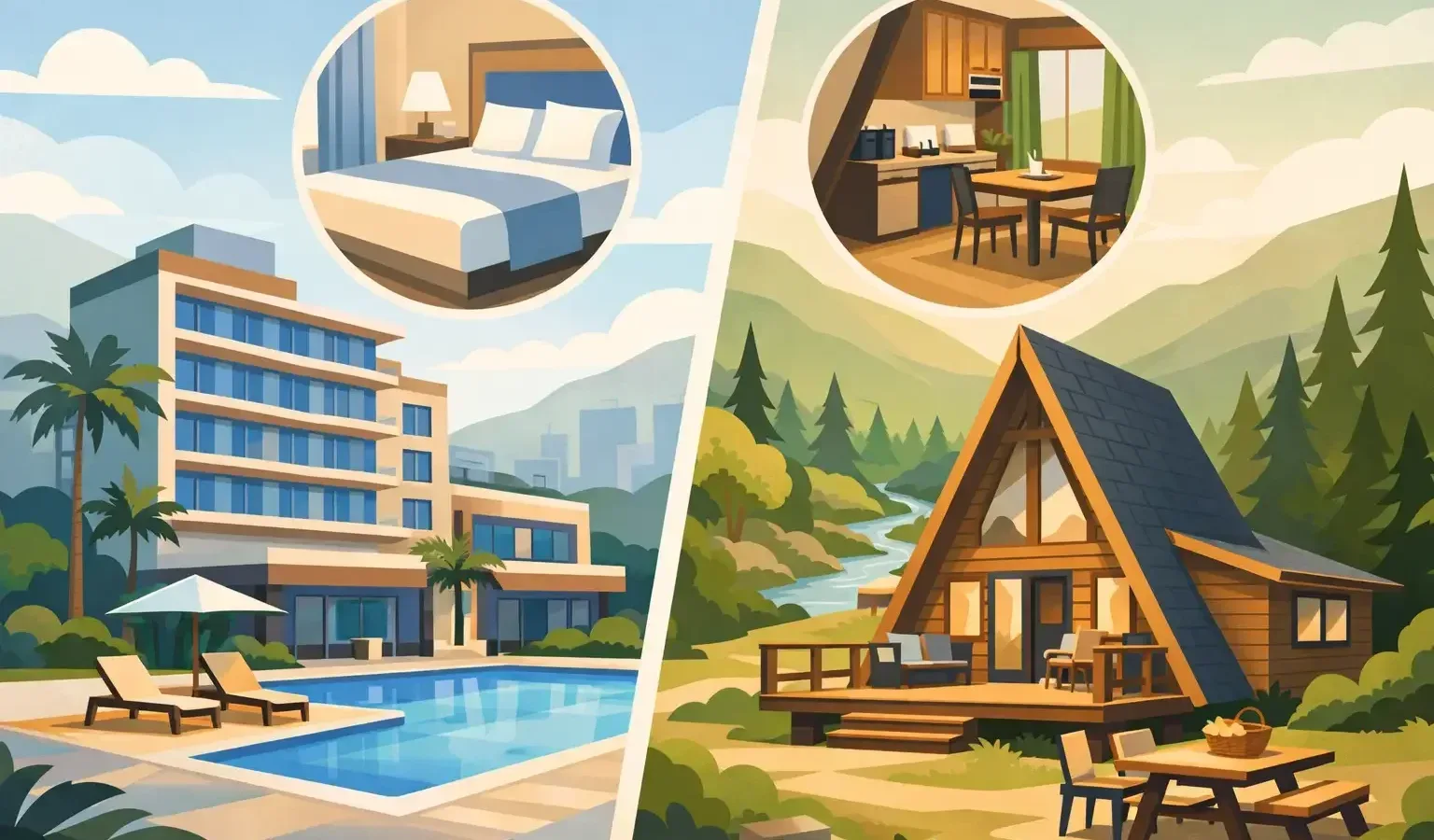
Hotels Versus Self Catering: Which Stay Fits You?
A hotel can be exactly right when you want to arrive, hand over the details, and let someone else set the pace. But for a long weekend in the Welsh countryside, hotels versus self catering is less about which is more luxurious and more about the kind of time you want to have. Do you picture breakfast whenever you wake up, muddy boots by your own door, and a private hot tub beneath a clear night sky? Or do you want a concierge, room service, and a bustling lobby close to town?
Both have their place. The best choice depends on who you are traveling with, how you like to spend your days, and whether your escape needs more freedom or more service.
Hotels versus self catering: the real difference
A hotel is built around convenience. Your room is cleaned, meals may be close at hand, and there is usually someone available to help with reservations or local questions. For a one-night city visit, a work trip, or travelers who prefer a lively setting, that can feel wonderfully easy.
Self-catering accommodation offers a different kind of ease: the comfort of having your own place. Rather than fitting your plans around restaurant hours, housekeeping schedules, or a single hotel room, you have space to settle in. You can make coffee before sunrise, pack a picnic for a hike, cook a favorite family meal, or simply order takeout and eat it at your own table.
That independence is especially valuable in North Wales. A day might begin with a walk in the Clwydian Range, lead to a beach, castle, or local market, and end later than expected after a leisurely pub dinner. Returning to a private lodge means there is no need to rush or coordinate with anyone else’s timetable.
Privacy is often the deciding factor
Hotels can be social by nature. Hallways, elevators, breakfast rooms, shared pools, and parking lots all come with other guests. That atmosphere suits people who enjoy being in the middle of things, but it is not always what couples, families, or friends mean when they say they need a break.
In a self-catering lodge, the space is yours for the stay. There is room to talk without whispering, play a board game without watching the clock, and enjoy an unhurried evening without footsteps passing your door. A private outdoor area changes the experience, too. Instead of booking a time slot or sharing a spa, you can step into your own hot tub when the day feels ready to end.
For couples, that privacy can make a two-night escape feel genuinely restorative. For friends, it means a shared trip without the awkward split between separate rooms. And for families, it offers a calmer base where children can nap, play, and eat on a familiar rhythm.
Space matters more than square footage
A hotel room is often designed primarily for sleeping. Even in a lovely hotel, four people in one room can feel close by the second morning, while booking multiple rooms can make a family or group feel separated.
Self-catering stays tend to work better when time together is part of the point. A living area gives everyone somewhere to gather after a day outdoors. A kitchen provides more than appliances – it gives you choice. You can keep milk for the kids, chill a bottle of something special, prepare a simple breakfast, or bring back local ingredients to try.
This does not mean every guest wants to cook on vacation. You do not have to. The real benefit is knowing you can decide in the moment. Some evenings call for a meal at a nearby pub; others call for comfortable clothes, an easy supper, and nowhere else to be.
At Owl Lodges, each A-frame lodge sleeps up to four guests, allowing small families, couples, and friend groups to share a polished, welcoming space without losing the feeling of a private retreat.
What about service and housekeeping?
This is where hotels have a clear advantage for some travelers. If daily housekeeping, breakfast brought to the table, and staff available around the clock are central to your ideal trip, a hotel may be the better fit. A hotel is also useful if you are arriving very late, staying only briefly, or want to be within walking distance of a particular restaurant or event.
Self-catering is more hands-on, though not necessarily less thoughtful. You make your own breakfast and keep the space as you use it. In return, you are not interrupted by housekeeping, and you are free to live at your own pace. Premium lodges can still include the small details that make an arrival feel special: a warm welcome pack, quality linens, carefully chosen interiors, clear local recommendations, and personal help when it is needed.
The distinction is simple. Hotel service is often visible and frequent. Lodge hospitality is quieter, giving you room while ensuring the essentials have been considered.
Dining freedom can improve the whole trip
Hotel dining is appealing when you want a formal dinner, a dependable breakfast, or no decisions at all. Yet eating every meal out can become expensive, especially for a family, and it can be tiring if you are traveling with young children or returning from a full day of exploring.
A self-catering kitchen gives a trip more flexibility without taking away the pleasure of eating out. Start with pastries and coffee at the lodge, stop at a farm shop for lunch supplies, then head to a local pub in the evening. If rain arrives or little ones are tired, you already have an easy alternative.
For guests with dietary needs, the ability to prepare familiar food is often a relief rather than a luxury. It also makes early mornings simpler before a hike, a drive to Snowdonia, or a day on the North Wales coast.
Self-catering can offer better value for groups
The nightly price is only part of the calculation. A hotel may look less expensive at first, but costs can grow once you add extra rooms, breakfasts, parking, dining out for every meal, and shared leisure facilities that may carry additional charges.
With a lodge, one booking can accommodate your group in a single, comfortable setting. You have a kitchen, living space, and outdoor area included, so the stay itself does more of the work. For two couples or a family of four, that can make self-catering particularly good value, even when the accommodation feels like a treat.
Value is not only financial, either. A private hot tub, scenic views, air conditioning for warm days, and enough room to relax can turn downtime into part of the vacation rather than the gap between activities.
The best option for dogs and young children
A pet-friendly hotel can be convenient, but policies vary widely. There may be limits on where dogs can go, additional fees, and less outdoor space for them to settle. A dog-friendly lodge often makes the practical side of traveling with a pet easier: there is more room for beds, bowls, towels, and that inevitable collection of wet paws and walking gear.
For parents of young children, self-catering also removes a great deal of pressure. Having separate sleeping areas, a fridge for snacks, and a place to unwind after bedtime can transform a family trip. An enclosed layout adds reassurance when children want to play outside, while adults can remain nearby and relaxed.
Of course, a centrally located hotel with a kids’ club or pool may be perfect for some families. But if your goal is fresh air, slower mornings, and an escape that feels contained and peaceful, a lodge is often the more natural choice.
Choose the stay that leaves room to breathe
Choose a hotel when you want to be looked after at every turn, stay close to the center of activity, or keep your visit short and simple. Choose self-catering when privacy, flexibility, and time together matter as much as the destination itself.
For a North Wales escape, imagine the first morning rather than just the check-in. If it involves opening the curtains to valley or mountain views, making breakfast slowly, and deciding whether the day calls for a walk, an adventure, or another hour in the hot tub, a private lodge may be the stay that lets the trip feel entirely your own.