
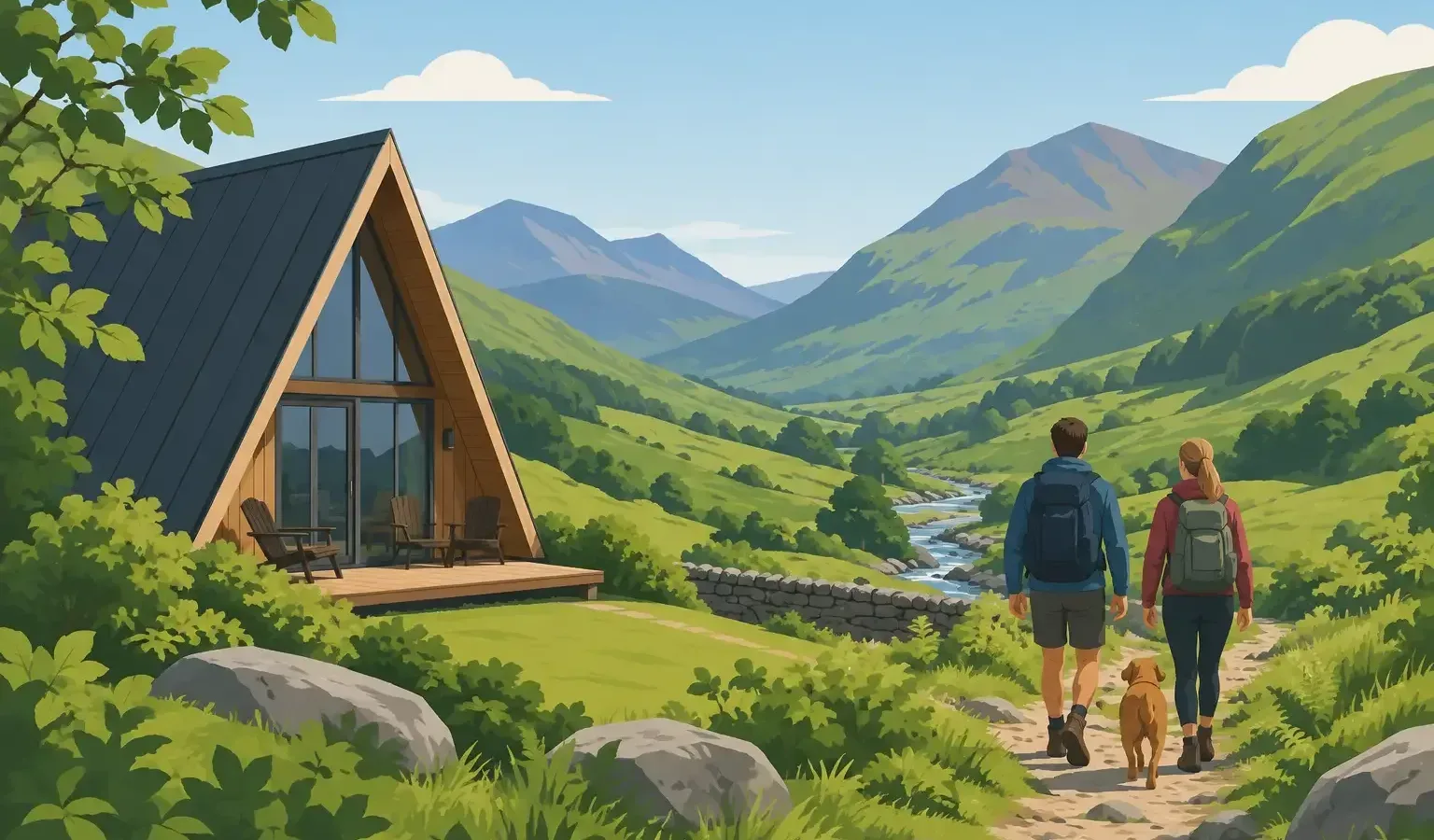
Enjoy Valley Walks Responsibly in North Wales
A valley walk can look wonderfully untouched: a ribbon of path between hedgerows, sheep in a neighboring field, birdsong carrying across the slopes. Yet these landscapes are living, working places. To enjoy valley walks responsibly is not about turning a relaxed day outdoors into a set of rules. It is about making a few thoughtful choices so the peace, wildlife, and welcome that make North Wales special remain part of the experience for everyone.
From the Clwydian Range, a gentle ramble can lead through farmland, woodland, quiet lanes, and wide-open views in a surprisingly short distance. That variety is part of the joy. It also means conditions can change quickly, paths may cross private land, and the people who live and work here rely on visitors treating the countryside with care.
Start with the right route for your day
The best walk is not always the longest or steepest one. For a couple looking for fresh air before an unhurried pub lunch, a well-marked valley route may be far more rewarding than an ambitious all-day hike. Families with young children often get more from a shorter circular walk with room to pause, spot birds, and enjoy a snack than from pushing on when little legs are tired.
Before setting off, check the forecast, daylight hours, and the route’s terrain. North Wales weather can be bright and calm at breakfast, then turn wet or misty on higher ground by midafternoon. Sturdy footwear with grip is a sensible choice even on a route that appears gentle, particularly after rain. Bring water, a light waterproof layer, and a charged phone, but do not rely on a phone signal in every valley.
Choose routes that match the whole group, including your dog. A muddy footpath, a narrow stile, or a section beside livestock may be manageable for experienced walkers but less comfortable with a stroller, a young child, or an excitable pup. There is no prize for completing a route that stops being enjoyable.
Give yourself time to wander well
A little extra time makes a countryside walk feel less like a mission. It lets you close gates properly, wait patiently if livestock is being moved, and step aside for other walkers without rushing. It also leaves room for the lovely unscripted moments: a red kite overhead, a patch of bluebells in spring, or the changing light across the hills.
Keep to paths and respect the working landscape
Many beautiful valley walks pass through working farms. Fields are not simply scenic backdrops. They may hold grazing animals, growing crops, or ground that needs protecting from erosion. Follow waymarkers, keep to public rights of way, and avoid creating a new shortcut around a muddy patch or a closed gate.
It can be tempting to edge around puddles or boggy ground, but repeated detours gradually widen a path and damage the vegetation beside it. If conditions allow, walk through the mud rather than around it. Your boots can be cleaned later; recovering ground takes much longer.
Close gates behind you unless they are clearly secured open. This small habit matters enormously where livestock is concerned. If you are unsure whether a gate should be closed, look at how you found it and follow any nearby signage. Never climb fences or walls, even when a route seems unclear. Pause, check your map, and retrace your steps if needed.
Be considerate around homes, farmyards, and country lanes too. Keep noise low, do not block entrances while taking photos, and pass through without treating private spaces as part of the attraction. A warm rural welcome depends on that mutual respect.
Walking responsibly with dogs
A dog-friendly stay and a valley walk are a perfect pairing, especially when the reward is returning to a cozy lodge for a warm shower and a quiet evening. But the countryside asks more of dog owners than a city park does.
Keep dogs under close control at all times, and use a leash around livestock, near roads, and wherever signs request it. Even the friendliest dog can frighten sheep, disturb nesting birds, or run farther than expected when a scent catches the breeze. During lambing season in particular, give ewes and lambs plenty of space and choose an alternative route if necessary.
Always pick up dog waste. Carry it until you find a suitable bin rather than leaving a bag beside the trail, fence, or gate. A tied bag is still litter, and it can create an unpleasant problem for farmers, walkers, and wildlife. If your dog enjoys a paddle in a stream, check the current first and avoid letting them disturb birds along the banks.
Leave wildlife room to thrive
One of the quiet pleasures of the Clwydian countryside is that you do not need to search hard for signs of wildlife. You may hear owls after dusk, see rabbits at the edge of a field, or notice a buzzard circling on a thermal. The most memorable sightings usually happen when we slow down and give animals space.
Watch from a distance and resist the urge to get closer for a photograph. Never feed wild animals, disturb nests, or move stones and logs in search of creatures underneath. Those seemingly small actions can disrupt shelter, food sources, and breeding sites.
If you stop for a break, choose a durable spot away from sensitive banks, wildflowers, and the edges of fields. Keep voices gentle, especially in woodland and near water. You may notice more when you do: the rustle of leaves, the tap of a woodpecker, or the soft movement of a stream below the path.
Take only photographs, and take your litter home
Even small items can spoil a landscape and harm animals. Fruit peels, tea bags, tissues, and biodegradable packaging do not belong on a trail simply because they will break down eventually. They can attract animals, introduce non-native seeds, or linger far longer than expected in cool, damp conditions.
Pack a small bag for every scrap of litter, including food wrappers and dog-waste bags. If a public bin is overflowing, take your waste with you rather than leaving it beside the bin. This is one of the simplest ways to care for the places that give us so much.
Share the path with kindness
Valley paths are shared by walkers, runners, cyclists, horse riders, local residents, and farmers. A little awareness keeps the experience calm for everyone. Make space where you can, keep children close when others are passing, and offer a friendly greeting.
If you meet horses, slow down, speak quietly so horse and rider know you are there, and follow the rider’s direction. On narrow paths, step aside carefully rather than squeezing past. For cyclists, a clear warning and patience are appreciated, especially around blind bends or walkers with dogs.
The same applies to parking. Use designated spaces where available, avoid passing places and field entrances, and never leave a vehicle where it narrows an already tight lane. Emergency vehicles, tractors, and local traffic still need to get through, whatever the view may be like from the roadside.
Let the season shape the walk
Every season brings a different kind of valley beauty, and responsible walking changes with it. Spring calls for extra care around nesting birds and lambs. Summer can bring dry ground, warmer temperatures, and busier trails. In fall, leaf-covered roots and wet stone can be deceptively slippery. Winter offers clear views and deep quiet, but shorter days and saturated paths demand more preparation.
After prolonged rain, consider choosing a more resilient route on lanes or established tracks rather than heading onto a fragile, muddy footpath. If an area is signed as closed or unsafe, trust the notice. Turning back can feel disappointing in the moment, but it often leads to a better afternoon elsewhere – and a good reason to return.
At Owl Lodges, the surrounding landscape is part of the stay, not just the view beyond the window. A considerate walk lets you come back with rosy cheeks, muddy boots, and the satisfying feeling that you have enjoyed the countryside without asking it to absorb the cost.
As you head back down the valley, take one last look around, check that nothing has been left behind, and let the pace ease. The most generous way to experience North Wales is to leave its paths, fields, and quiet corners ready for the next person – and for the wildlife that calls them home.