
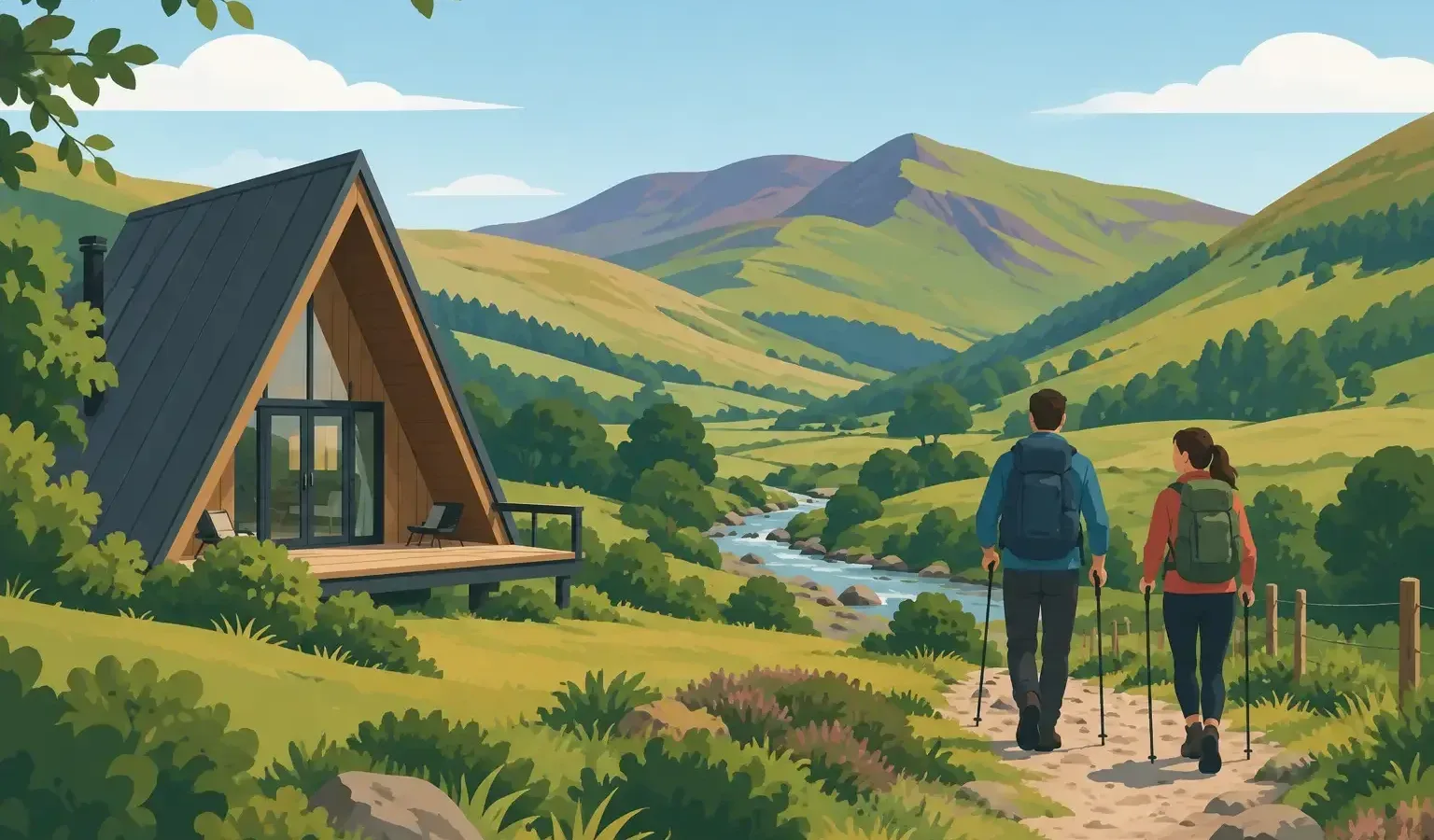
Plan a Clwydian Walking Holiday With Ease
The moment you reach the Clwydian Range, the pace changes. Fields fold into wooded slopes, stone villages sit quietly below the ridgeline, and the views seem to stretch farther with every step. If you are looking to plan a Clwydian walking holiday, this is a place to make room for both: a rewarding day on the trails and an unhurried evening back at your own private retreat.
A good walking break here does not need to mean racing between famous summits. The Clwydian Range is wonderfully suited to a long weekend, with short hill walks, historic trails, family-friendly woodland routes, and more demanding ridge days all within easy reach. The secret is choosing a base that lets you walk at your own pace – then return to warmth, comfort, and a little well-earned calm.
Plan a Clwydian Walking Holiday Around Your Pace
Start by deciding what you want the break to feel like. Couples may want one satisfying hill day followed by a slower morning and lunch at a local pub. Families often find that a gentle woodland walk, a picnic, and an afternoon spotting birds and sheep is the right balance. Friends can build a more energetic itinerary around the ridge, then spend the evening swapping stories over dinner.
The Clwydian Range and Dee Valley National Landscape offers all of these possibilities. It is close enough for an easy escape from Chester, Liverpool, Flint, and beyond, yet it feels properly rural once you are among its lanes, farms, and hills. You can arrive on a Friday evening, wake to open countryside, and still fit in a memorable walk before heading home on Sunday.
Leave some breathing room in your plan. North Wales weather can change quickly, and one of the pleasures of this landscape is allowing a misty morning to become a late-start coffee, or choosing a sheltered route when the ridge is in cloud. A flexible itinerary nearly always makes for a better holiday.
Choose Walks That Suit Your Group
For a classic ridge day: Moel Famau
Moel Famau is the best-known peak in the range for good reason. Its Jubilee Tower summit is a striking destination, and on a clear day the wide views across North Wales, Cheshire, and toward the coast make the climb feel generous rather than merely strenuous.
There are several ways up, from shorter ascent routes to longer circuits that take in forest and open hillside. It can be busy on sunny weekends, so an early start is worthwhile if you prefer quieter paths. The ground can also become muddy after rain, making proper walking boots a sensible choice.
For history underfoot: Offa’s Dyke Path
The national trail follows the old earthwork associated with King Offa’s eighth-century frontier, passing through parts of the Clwydian Range. You do not need to tackle the full trail to enjoy it. A point-to-point section or a circular route that joins it for part of the day gives you a real sense of the landscape’s long history.
This is a fine choice for confident walkers who enjoy navigation and varied terrain. Check your route carefully before setting out, particularly if you are combining public footpaths, country lanes, and higher ground. Mobile signal can be uneven in rural valleys, so download maps in advance and bring a paper backup.
For a shorter, gentler outing: Loggerheads and woodland trails
Around Loggerheads Country Park, limestone scenery, riverside paths, and woods create a softer kind of walking day. It is especially appealing for families, those bringing a dog, or anyone who would rather keep the steepest climbs for another visit.
Even an easy route deserves preparation. Wet leaves, exposed roots, and rocky sections can be slippery, particularly from fall through early spring. Take your time, wear footwear with grip, and let younger walkers set a pace they can enjoy.
Pick the Right Time of Year
Every season has a different character in the Clwydian hills. Spring brings fresh green fields, birdsong, and brighter days, though trails may still be wet underfoot. Summer offers longer evenings and the best chance of lingering over a summit view, but popular trailheads can be busier during school vacations.
Fall is particularly beautiful for a walking escape. The woods turn copper and gold, the air feels crisp, and a hot tub soak after a day outside becomes even more inviting. Winter walks can be wonderfully peaceful too, with low sun, bare trees, and clearer views through the countryside. They do ask for more care: check forecasts, finish before dark, and choose lower routes if high winds or ice are expected.
If your dates are flexible, consider a midweek stay. Paths are often quieter, and the whole experience feels more spacious – from the trailhead to the local café.
Pack for Comfort, Not Just Distance
The best kit is the kit that keeps you comfortable enough to notice where you are. Sturdy, broken-in walking boots are ideal for longer routes and muddy conditions, while trail shoes may be enough for dry, low-level paths. Layers work better than one heavy coat, especially when a sheltered valley turns into a breezy ridgeline.
Bring a waterproof jacket even if the forecast looks kind. Pack water, snacks, sunscreen, and a small first-aid kit, along with a charged phone and your route details. If you are walking with children, a spare warm layer and a few favorite snacks can transform the final mile.
Dog owners should bring water, a bowl, towels, and a lead. Livestock are common in this working landscape, so keep dogs under close control and follow signs carefully. Leave gates as you find them, stay on marked paths, and take all litter home. These small habits help protect the countryside that makes the holiday special.
Make Your Lodge Part of the Experience
Where you stay shapes the rhythm of a walking trip. A hotel room can work for a single overnight, but a self-catering lodge gives your group space to spread out, cook a relaxed meal, dry off after a shower, and sit together without watching the clock.
Near Nannerch, a countryside base also makes it easy to mix active days with slower ones. You might head out early for a ridge walk, return for lunch with a valley view, then spend the afternoon reading, watching for wildlife, or simply doing very little. Air conditioning brings welcome comfort in warmer weather, while a private hot tub is a lovely place to ease tired legs beneath the evening sky.
For guests traveling with a dog, Too-wit Lodge offers a welcoming place to return to after muddy pawprints and fresh-air adventures. Families with younger children may prefer the enclosed setup at Too-woo Lodge, where outside play feels easier to supervise. Both are designed for up to four guests, keeping the experience personal, peaceful, and comfortably private.
Build a Simple Three-Night Itinerary
For a relaxed first visit, arrive with groceries or plan a simple supper on your first evening. Keep the next morning for your headline walk – perhaps Moel Famau or a chosen section of Offa’s Dyke – and avoid packing too much else into the day. A long lunch, a slow drive through nearby villages, and a soak back at the lodge are more than enough.
Use your second full day for something gentler. Explore woodland trails, visit a local market town, or take a scenic drive toward the coast or Eryri National Park. The Clwydian Range is a rewarding destination in its own right, but its location gives you options when the weather, energy levels, or interests of your group change.
On departure day, choose a short morning stroll rather than another ambitious route. It is a kinder ending to a restorative break, and it leaves you with that lingering sense of open space rather than a rushed dash for home.
A Clwydian walking holiday is at its best when it feels less like a checklist and more like time reclaimed. Choose one or two walks that excite you, pack for the hills, and leave enough room for the quiet pleasures in between – the view from the deck, warm water after rain, and the sound of the countryside settling for the night.