
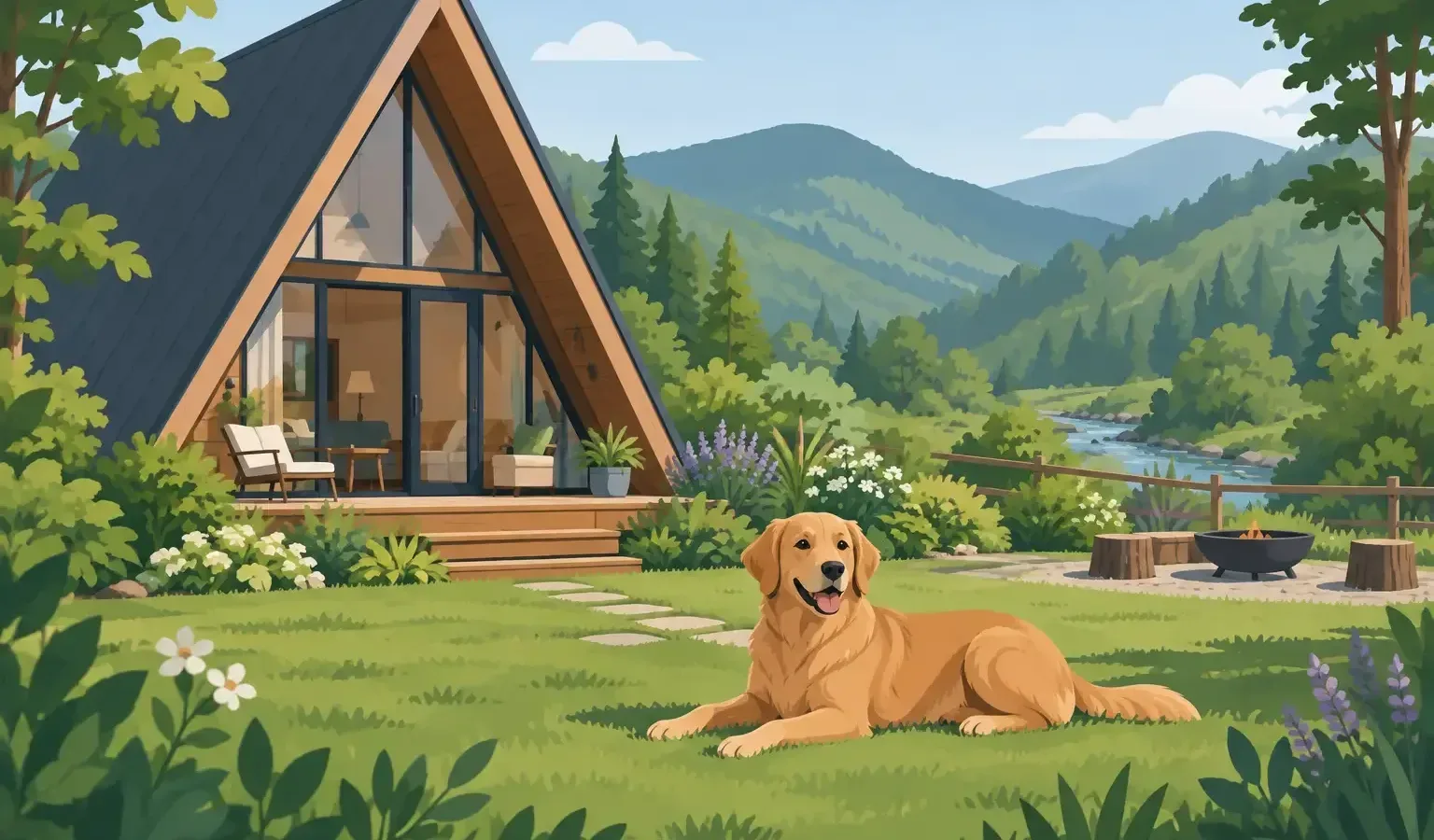
Can Dogs Use Lodge Gardens? A Considerate Guide
A morning in North Wales is better with a dog at your side: cool grass beneath their paws, birdsong in the hedgerows, and a valley walk waiting beyond the door. But can dogs use lodge gardens? Usually, yes, when you have booked a dog-friendly lodge and follow the property’s specific pet guidance. The more useful question is how to help your dog enjoy that outdoor space safely, quietly, and respectfully.
A private lodge garden can make a countryside break feel wonderfully easy. It gives your dog a place to stretch after the journey, sniff the fresh air, and settle beside you while you enjoy a coffee outside. Yet a garden is not automatically a secure, all-day play area. Boundaries, neighboring wildlife, livestock, young children, and the lodge’s own rules all matter.
Can Dogs Use Lodge Gardens at Dog-Friendly Lodges?
Dog-friendly accommodation is designed to welcome pets, but each lodge will have its own arrangement. Some gardens are enclosed, some have partial boundaries, and some open onto wider countryside where a lead is essential. Before you book, check whether dogs are permitted in the garden, whether it is fully secure, how many dogs are accepted, and any rules around furniture, bedrooms, or hot tubs.
At Owl Lodges, Too-wit Lodge is the choice for guests traveling with a dog. It is a peaceful base for couples, small families, and friends who want the freedom of a countryside break without leaving a four-legged family member behind. Too-woo Lodge has an enclosed setup tailored to families with young children, so guests should always choose the lodge that matches their party and confirm pet arrangements before arrival.
Even at a pet-welcoming lodge, it is wise to treat the garden as a shared countryside setting rather than a guaranteed escape-proof pen. A small dog may fit through a gap that a larger dog would ignore. An athletic dog may clear a low boundary. And an otherwise reliable dog can become unexpectedly interested in a rabbit, sheep, or unfamiliar scent.
Start With a Calm Arrival
The first few minutes set the tone for the stay. Keep your dog on a leash while bringing bags inside and while they take in the garden for the first time. Let them sniff around with you nearby, notice the boundaries, and become familiar with the new sounds and scents.
This slower introduction is particularly helpful after a long drive. Rather than opening the door and hoping for the best, give your dog a short, calm toilet break, offer fresh water, and let them decompress indoors. Once they have settled, a supervised wander outside is more likely to be relaxed than frantic.
If your dog is anxious in new places, bring familiar comforts from home. Their usual bed, a blanket carrying familiar scent, a favorite chew, and their normal food bowls can make a design-led lodge feel like their own cozy corner surprisingly quickly. Keeping meals and walks close to their usual routine helps, too.
Check the Boundaries With Your Dog in Mind
“Enclosed” can mean different things to different guests. Consider your dog’s size, temperament, and habits rather than relying on a single description. Look for low areas in fencing, open gates, hedges that could be pushed through, and anything they might use as a step up.
This does not take long, and it makes outdoor time much more relaxing. If you are unsure at all, use a long line or stay in the garden with your dog. Supervision also prevents accidental digging, chewing, or muddy paws racing back into the lodge after rain.
Wildlife, Livestock, and the Joy of a Lead
The Clwydian Range is rich with the things dogs love to investigate: birds in the undergrowth, rabbit trails, new smells on the breeze, and the occasional farm animal in nearby fields. That is part of the magic of staying in the countryside. It is also why recall should never be assumed in an unfamiliar place.
Keep your dog leashed where signs request it, near livestock, and on walks where visibility is limited. Even a friendly dog can frighten sheep or disturb ground-nesting birds. A lead is not a restriction on the adventure. It is what allows everyone to enjoy the landscape with care, including the people and animals who call it home.
In the garden, avoid leaving your dog outside alone for long periods. They may bark at passing wildlife, become unsettled by unfamiliar sounds, or find a way to investigate beyond the boundary. Staying nearby means you can enjoy the fresh air together and catch those small moments that make a lodge break memorable.
Garden Etiquette Makes Every Stay Better
A premium self-catering stay should feel relaxed, not rule-heavy. A little thoughtfulness simply protects that feeling for the next guests, the lodge team, and anyone staying nearby.
Always pick up after your dog promptly, including in garden areas. Bring enough waste bags for walks and use the designated disposal arrangements. If your dog comes in muddy after a trail or a rainy garden visit, clean and dry their paws before they settle indoors. A towel by the door is one of the most useful things to pack for a North Wales escape.
Noise matters, especially in the early morning and evening. Many dogs alert-bark in a new environment, but do not let it become a pattern. Closing curtains, bringing them inside, offering a chew, or sitting with them outdoors can help them settle. A quiet garden is more restful for your dog as well as for everyone around you.
It is also considerate to keep dogs off outdoor furniture unless the lodge specifically says otherwise. Bring a washable blanket if your dog likes to lie close while you sit outside. That gives them a comfortable place of their own and keeps the space fresh for all guests.
Think Twice About Hot Tubs and Dogs
A private hot tub is made for human relaxation under wide North Wales skies, not for canine bathing. Dogs should not go in the hot tub. The warm water can cause overheating, the chemicals are not suitable for them, and wet paws can make the surrounding area slippery.
Settle your dog indoors, in a safe area of the lodge, or with another adult while you enjoy the tub. Make sure they have water, a comfortable bed, and a familiar toy. This is often easier after a good walk, when they are ready for a nap while you take a well-earned pause.
The same principle applies to garden candles, fire features, cleaning products, and food left outside. Keep anything potentially harmful well out of reach, and do not assume that a natural-looking garden is free from risks. Dogs may be curious about berries, mushrooms, compost, or unfamiliar plants, so discourage grazing and contact the lodge team promptly if you are concerned about anything they have eaten.
Plan the Day Around Your Dog, Not Just the Destination
North Wales offers big days out, from mountain views and coastal air to market towns and historic attractions. But the most enjoyable itinerary is one that suits your dog’s energy and confidence. A long hike may be perfect for an active adult dog, while an older dog may prefer a shorter scenic walk followed by a warm rest back at the lodge.
Avoid leaving a dog alone in unfamiliar accommodation while you head out for hours. Separation anxiety can appear even in dogs that are usually content at home, and an unsettled dog may bark, scratch doors, or feel distressed. Where possible, choose dog-friendly walks and outdoor stops, then return to the lodge for an unhurried afternoon in the garden.
Pack for changing weather, too. A lightweight towel, water bowl, extra leash, treats, tick remover, and a coat for small or short-haired dogs all earn their place in the car. North Wales can offer sunshine, mist, and a passing shower in one day, and a prepared dog is a happier travel companion.
Before You Leave Home
A quick check before departure can prevent most problems. Make sure your dog’s ID tag and microchip details are current, bring any medication, and save the contact details for a local veterinary practice in case of an emergency. If your dog has a strong chase instinct, poor recall, or a history of escaping, be honest about it and plan for continuous leash or long-line use.
Most of all, read the lodge’s pet policy before you arrive, not while you are unpacking. Clear expectations make it easier to relax from the first evening onward.
A lodge garden can be a lovely part of a dog-friendly escape: a private patch of fresh air between walks, a place to dry off after rain, and somewhere to sit together as daylight fades over the hills. With the right lodge, a little supervision, and respect for the countryside, your dog can enjoy the break just as much as you do.