
Holiday Stargazing Tips for a North Wales Escape
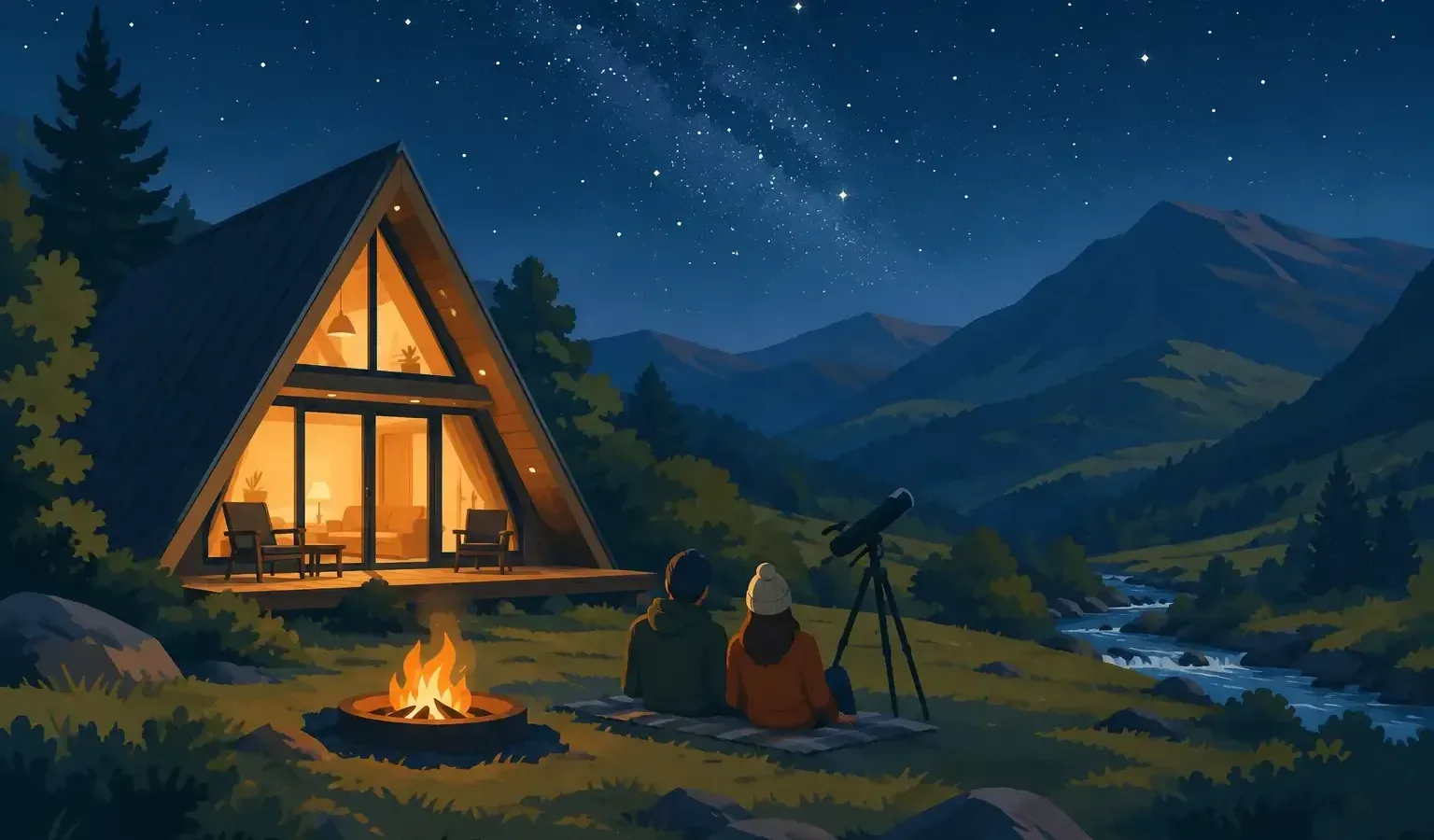
A countryside night has a way of slowing everything down. Once the last light fades over the Clwydian Range, the horizon feels wider, the air turns still, and a quick glance upward can become the best part of the evening. These holiday stargazing tips will help you make the most of it, whether you are sharing a quiet break as a couple, making a family memory, or settling in with friends after a day outdoors.
You do not need a telescope, technical knowledge, or a late-night expedition to enjoy the sky. A comfortable spot, a little patience, and the right conditions are usually enough. The real luxury is having the time to look up.
Plan Around Darkness, Clouds, and the Moon
The clearest-looking day does not always lead to the best stargazing night. Check the evening forecast before dinner and look beyond the temperature. Cloud cover matters most, followed by wind and visibility. A crisp, still night can feel wonderfully clear, but even a partly cloudy forecast can deliver lovely gaps in the sky.
For the darkest view, aim for a night close to a new moon. With less moonlight washing out the background, fainter stars become easier to spot. That said, a bright moon has its own charm, especially for families with younger children or anyone who prefers an easier walk between the lodge and a viewing spot. The moon can light the hills and give the landscape a beautifully soft glow.
Try not to judge the sky too early. In summer, darkness arrives later than many visitors expect, while autumn and winter offer longer nights and often more immediate views after dinner. Give your eyes 15 to 20 minutes away from bright indoor lighting before deciding how many stars are out. That small pause makes a remarkable difference.
Holiday Stargazing Tips for Getting Comfortable
A memorable night under the stars should feel restful, not like a test of endurance. The best approach is to make it part of a slow evening rather than a mission with a fixed result. Have a warm drink, take a blanket outside, and let the sky reveal itself at its own pace.
Dress more warmly than you think you need to. Even after a sunny North Wales day, the temperature can drop quickly once the sun disappears behind the hills. Layers are more useful than one heavy coat, and warm socks make a big difference when you are standing still. Bring a hat in the cooler months and choose shoes with a good grip if the ground is damp.
Keep outdoor lighting low. Porch lights, phone screens, and flashlights all make it harder for your eyes to adjust. If you need a light to move around safely, use the dimmest setting possible and point it down toward the ground. A red-light setting is especially kind to night vision, but simply putting your phone away once you are settled will help.
If a private hot tub is part of your evening, enjoy it thoughtfully. Let your eyes adjust before you get in, keep drinks non-glass, and have towels and warm layers ready for when you step out. The contrast between warm water and cool night air is part of the magic, but it can feel chilly quickly afterward.
Start With What You Can See
You do not have to identify every constellation to feel connected to the night sky. Begin with the brightest object or pattern you notice. On a clear evening, look for the familiar shape of the Big Dipper, which forms part of Ursa Major. Its outer edge can help point you toward Polaris, the North Star, which sits close to true north.
In winter, Orion is often one of the easiest constellations to find. Look for three bright stars in a neat row: Orion’s Belt. Summer skies can bring the soft, pale band of the Milky Way, although how clearly it appears depends on cloud, moonlight, and the natural brightness of the night.
A simple stargazing app can be fun if you would like names and stories, but use it briefly and dim the screen first. It is easy to spend more time looking at the app than the sky. For children, choose just one thing to find – the moon, a planet, or a recognizable constellation – then let imagination take over. A blanket, a warm drink, and a game of spotting shapes between the stars can be all the entertainment needed.
Give the Night a Little Time
Stars do not always arrive all at once. At first, you may see only the brightest points above the lodge. As your eyes adapt, more begin to appear, particularly when you look slightly to the side of a faint star instead of directly at it. This is a useful trick because the edge of your vision is more sensitive in low light.
Settle in for at least 20 minutes if the weather allows. Look north, south, east, and west rather than focusing on one patch of sky. The open countryside around Owl Lodges offers the kind of peaceful setting where you can hear the night as well as see it: an owl calling in the distance, leaves moving in a light breeze, or the quiet rustle of wildlife nearby.
It is also worth remembering that a cloudy night is not a spoiled evening. Low cloud rolling over the hills can be dramatic in its own right. On a family trip, the best memory may be an extra-late cup of cocoa, a shared blanket, and the excitement of waiting for one bright star to appear through a break in the clouds.
Be Kind to Wildlife and Each Other
The countryside is not silent after dark. It is home to animals that rely on darkness, including birds, bats, and small mammals. Keep voices gentle, avoid shining lights into hedgerows or trees, and do not try to approach anything you hear or see. Watching quietly is more rewarding and helps protect the calm that makes rural evenings special.
For dog owners, keep your dog close and supervised outside after dark, especially in unfamiliar surroundings. A short lead can be sensible if there is wildlife activity nearby. If you are staying with young children, decide in advance where everyone will sit or stand, and make sure an adult handles any movement around steps, paths, or the hot tub area.
This is one occasion when less gear is often better. You may want a blanket, a hot drink, a fully charged phone for emergencies, and a small low-level light for safe footing. Beyond that, leave room for the experience itself.
Make It a Small Holiday Ritual
Stargazing works beautifully when it becomes a gentle end-of-day ritual. After a long walk, a local meal, or an afternoon exploring the North Wales coast, turn off the screens for a little while and step outside together. Do not worry about capturing the perfect photo. Phone cameras rarely show the sky as your eyes do, and chasing an image can pull you away from the moment.
Instead, notice the details you will remember: the outline of the hills, the warmth of a blanket, the surprising brightness of a planet, or the quiet conversation that only seems to happen after dark. The sky changes every night, so there is no perfect forecast and no need to force it. If the stars appear, stay a while. If they do not, the stillness is waiting anyway.